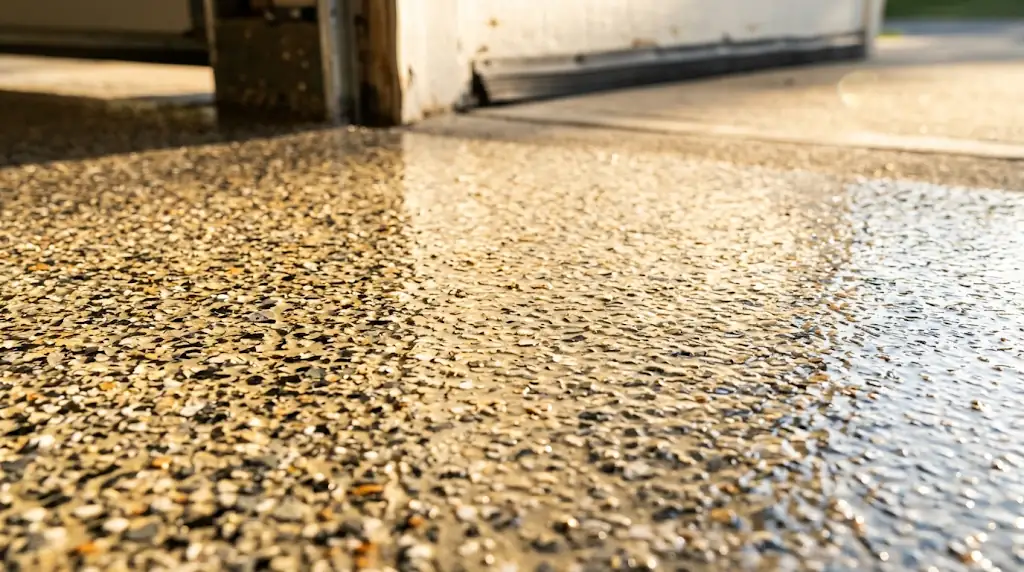
Summer heat drastically accelerates the chemical curing process of epoxy flooring, reducing the working time before the material hardens from an hour down to just 15 minutes. In Collin County, surface temperatures on a concrete slab baking in direct Texas sun can easily exceed 95 degrees, causing standard epoxy to flash-cure, bubble, and fail if not installed using specialized heat-tolerant resins and temperature management techniques.
Air temperature does not dictate the installation timeline; the slab temperature dictates the cure. A concrete slab in direct sunlight can run 10 to 20 degrees hotter than the surrounding air. Target temperatures for standard epoxy systems are between 60°F and 85°F. Professional installers use infrared thermometers to verify the surface temperature before mixing any chemicals.
The Chemistry of Heat and Epoxy
Epoxy cures through an exothermic, heat-generating chemical reaction between the resin and the hardener. The higher the ambient and slab temperature, the faster this reaction occurs. A faster cure means a shorter window to spread, level, and broadcast flake before the material gels.
Working outside the ideal temperature range directly impacts the “pot life,” which is the amount of time the epoxy remains pliable inside the bucket. High temperatures reduce working time and make it difficult to properly mix and apply the epoxy before it sets.
| Ambient / Slab Temperature | Estimated Pot Life (Working Time) | Installation Difficulty |
| 60°F | 45 to 60 Minutes | Ideal |
| 70°F – 80°F | 30 Minutes | Standard Working Range |
| 90°F+ | 10 to 15 Minutes | High Risk / Requires Modifications |
Temperature is only half the battle. Humidity must remain between 40% and 60%. High humidity causes a white, waxy film called “amine blush” to form on the surface. Collin County experiences dry, scorching afternoons that rapidly transition into humid evening storms. This dynamic weather environment requires strict environmental controls during the application process.
Common Summer Epoxy Failures in North Texas
Applying a standard box-store kit in July without adjusting for the heat guarantees failure. High ambient temperatures alter the viscosity of the epoxy resin and hardener, making them too fluid and difficult to control. When a coating fails due to heat, it presents in four distinct ways:
- Flash Curing and Roller Marks: The material heats up and sets too fast. This rapid gel time traps air, leaves distinct roller marks, and creates a highly uneven finish.
- Bubbles and Outgassing: High temperatures cause trapped air and gases in the concrete substrate to expand. These expanding gases push upward, forming bubbles in the curing epoxy. This also happens when moisture tries to escape a surface that has already skinned over.
- Hot-Tire Pickup: Weak, poorly bonded coatings soften under the extreme heat of car tires. The tires grip the softened coating and lift it completely off the concrete.
- UV Degradation (Yellowing): Standard epoxy breaks down and turns yellow when constantly exposed to ultraviolet light from the sun.
How Professionals Install Epoxy in Collin County Heat
National installation guides fail in Texas. Box-store DIY kits are engineered for average conditions, not a garage floor baking in the summer sun. Professional installations in Collin County require localized strategies to manage the rapid cure times.
- Early Morning or Evening Installs: Crews must start early in the morning to beat the peak slab temperatures and midday sun. Alternatively, applications are planned for the evening after peak heat hours, typically between 3:00 and 4:00 PM.
- No Acid Etching: Acid etching is a failed method over 85°F. The acid dries up too quickly in the heat, completely ruining its effectiveness. Professional preparation requires mechanical grinding to provide a consistent surface profile for the epoxy to adhere to.
- Slow-Cure Hardener Modifications: Professional-grade systems utilize slow-curing hardeners to extend working time. Slow-cure 100% solids and water-based epoxies provide up to 40 minutes of pot life even at 90°F.
- Material Storage Regulations: Epoxy components have strict storage temperature requirements. High ambient temperatures degrade the shelf life and performance of the epoxy before it is even mixed. All epoxies and urethane materials must be stored in a cool area between 60°F and the low 70s for a couple of days before the application.
- Environmental Blocking: Sunlight directly hitting the concrete causes an immediate spike in reaction speed. Installers must close garage doors, set up canopies for outdoor work, and shade windows to keep conditions steady.
- Smaller Batch Mixing: Materials are mixed in smaller batches to stay in control of the product before it cures too quickly. This prevents the epoxy from overheating inside the bucket. Installers never mix the chemicals in direct sunlight.
Local Service Area Requirements
Concrete slabs react differently to summer heat depending on their age, location, and soil composition. Adjustments are required based on your specific city.
- Frisco, Prosper, and Celina: These areas feature a high volume of new construction. The fresh concrete in these newer subdivisions retains less deep-set oil but absorbs intense, unbroken radiant heat from lack of mature tree coverage. Installations here strictly require early morning mechanical diamond grinding.
- McKinney and Plano: Older neighborhoods possess mature shade trees, but the legacy concrete slabs are prone to severe outgassing in the summer heat. Decades of expanding and contracting concrete pores require heavy, slow-curing primers to seal the slab before the topcoat is applied.
- Allen and Little Elm: Proximity to local water tables increases the ambient humidity. Evening installations in these areas carry a high risk of trapping humidity under the coating. Morning installations are mandatory to ensure the relative humidity remains in the safe 40% to 60% range.
Summer Cure Time Expectations
Epoxy cures faster in warm weather. While the floor might feel dry to the touch within hours, internal curing continues over the next few days. Rushing the process and driving on a hot, partially cured floor will destroy the finish.
| Temperature | Safe to Walk On | Safe to Drive On | Heavy Equipment Use |
| 70°F | ~18 Hours | ~48 Hours | ~72 Hours |
| 80°F | ~12 Hours | ~36 Hours | ~48 Hours |
| 90°F+ | ~8 Hours | ~24 Hours | ~36 Hours |
Do not assume an epoxy installation is impossible during a Texas summer. The heat does not rule out an installation; it simply rules out cutting corners. A professionally installed garage epoxy floor coating requires mechanical grinding, precise concrete repairs, and a commercial coating system applied under strict temperature controls.
Protect your property with a flooring system engineered specifically for North Texas extremes. For an accurate assessment of your concrete and a transparent breakdown of our heat-mitigation installation process, contact Frisco Epoxy Flooring. Visit our contact page today to secure your installation schedule.