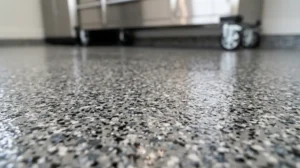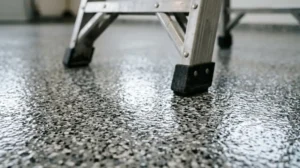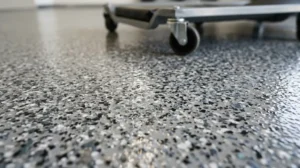
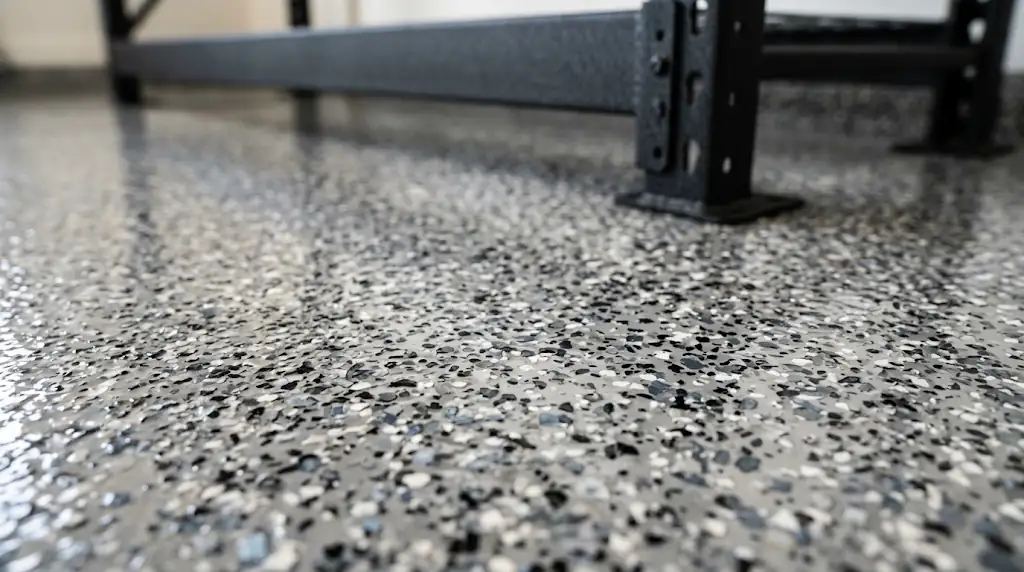
The best type of epoxy flooring for North Texas garages is a multi-layer hybrid system consisting of a 100% solids moisture-mitigating epoxy base coat, a full vinyl flake broadcast, and a UV-stable polyaspartic clear topcoat. This specific formulation combines the deep-wicking adhesion and hydrostatic pressure resistance of industrial epoxy with the heat tolerance and ultraviolet resistance of polyaspartic chemistry.
Single-product coatings fail in extreme environments. Garage floors in North Texas endure ground moisture migration from expansive clay soils, severe thermal expansion, and intense direct sunlight. A single material cannot solve all of these physical challenges simultaneously. Maximum durability requires matching each chemical compound to the specific mechanical stress it handles best.
Garage Floor Coating System Comparison
Choosing the right flooring chemistry requires comparing durability, UV stability, and moisture mitigation capabilities across common resin technologies.
| Coating System | Concrete Adhesion | UV & Yellowing Resistance | Hot-Tire Resistance | Lifespan | Best Use Case |
| Water-Based DIY Kits | Poor (Chemical etch only) | Very Low (Yellows quickly) | Fails (Lifts within 1–2 summers) | 1–2 Years | Temporary dust prevention |
| Solid-Color 100% Epoxy | Excellent (Mechanical grind) | Moderate (Ambers under sun) | High | 10–15 Years | Interior workshops, basements |
| Full Polyurea Direct-to-Slab | Moderate (Cures too fast) | High | High | 3–5 Years | Mild climates, quick turnarounds |
| Hybrid Epoxy + Polyaspartic | Maximum (Penetrates pores) | Maximum (100% UV stable) | Extreme (Withstands 300°F+) | 20+ Years | Residential garages in North Texas |
Why the Hybrid Epoxy-Polyaspartic System Wins
A true high-performance garage floor is not a single coat of paint. It is a multi-layered composite matrix engineered from the concrete slab up.
- Layer 1: Moisture-Mitigating Epoxy Primer. Epoxy has a longer open time and a smaller molecular structure than polyurea or polyaspartic coatings. This allows the resin to wick deep into the open capillaries of diamond-ground concrete, creating a mechanical root system. It acts as an impermeable moisture vapor barrier against hydrostatic groundwater pressure.
- Layer 2: 100% Solids Pigmented Base Coat. This high-build coat creates a uniform color foundation and adds structural thickness to the floor. It absorbs physical impacts and provides the wet bed required to lock in the decorative broadcast.
- Layer 3: Full Broadcast Vinyl Flake. Broadcast to complete rejection (meaning zero base resin remains visible), the vinyl chips add multi-dimensional color, conceal existing concrete imperfections, and add structural tensile strength to the body of the floor.
- Layer 4: UV-Stable Polyaspartic Topcoat. Polyaspartic is an aliphatic polyurea coating. It is completely impervious to UV radiation, will never turn yellow or amber, and cures to a rock-hard, non-porous finish that resists battery acid, oil, transmission fluid, and road salts.
North Texas Environmental Demands
Installing floor coatings in Collin County requires solving three distinct environmental factors that ruin lesser systems.
1. Expansive Clay Soils and Hydrostatic Pressure
The soil across North Texas is rich in expansive smectite clay. When it rains, the soil swells and traps groundwater directly against building foundations. This creates hydrostatic pressure that forces moisture vapor through the porous concrete slab. According to industry relative humidity measurement standards defined by ASTM F2170, uncontrolled moisture migration causes coatings applied without a true moisture barrier to blister, bubble, and delaminate from the slab.
2. Triple-Digit Summer Heat and Hot-Tire Pickup
When vehicles return home during a Texas summer, car tires reach temperatures between 130°F and 175°F. Standard store-bought epoxy softens under this heat. As the tires cool, the rubber contracts and physically pulls the softened coating off the floor. Polyaspartic topcoats feature a heat tolerance exceeding 300°F, rendering them completely immune to hot-tire pickup.
3. Intense Ultraviolet (UV) Degradation
Standard epoxies are aromatic polymers. Exposure to direct sunlight causes aromatic chemical bonds to fracture, turning clear or gray floors into an uneven, cloudy yellow. Garages with east- or west-facing overhead doors, large windows, or driveway aprons require an aliphatic polyaspartic topcoat to reflect UV rays without fading.
What About “One-Day Polyurea” Floors?
National franchise companies frequently market “one-day” polyurea systems. They apply a fast-curing polyurea directly to the concrete as a primer, broadcast flakes, and topcoat all within six hours. In North Texas, this system carries a high rate of delamination.
Polyurea cures exceptionally fast—often within 20 to 30 minutes. This rapid gel time prevents the resin from penetrating deep into the concrete pores before it solidifies. Instead of fusing into the concrete, it forms a surface-level film. When summer heat and sub-slab moisture pressure build up beneath the floor, the polyurea base layer shears off in large sheets. High-solids epoxy cures slowly, penetrating deep into the slab over several hours to ensure permanent adhesion.
Concrete Profiling Across Local Cities
Selecting the best floor system also depends on the structural age and condition of the concrete across Collin County:
- Frisco and Prosper: Rapid construction in new subdivisions often means newer slabs that have not fully stabilized. The mandatory addition of a dedicated moisture vapor barrier epoxy primer prevents moisture release from ruining the finish.
- McKinney and Plano: Mature residential neighborhoods feature concrete slabs with historic settlement cracks, ground shifting, and long-term oil contamination. These floors require aggressive diamond grinding to concrete surface profile (CSP) 2 or 3, combined with polyurea elastomeric crack repair before base coating.
- Celina: Fast builds situated on heavy former farmland require heavy structural profiling to address uneven settling along control joints.
- Allen and Little Elm: Homes near regional lakes experience higher localized humidity spikes. High-solids primers provide the necessary resistance to withstand fluctuating moisture levels beneath the home.
Long-Term Value and Maintenance
A multi-layer hybrid system provides the lowest lifetime cost of ownership. While cheap single-coat applications cost less upfront, they demand full removal and reapplication every two to three years.
A professionally diamond-ground hybrid system creates an impermeable, seamless surface that sweeps clean with a microfiber dust mop and requires only mild detergent for spills. It transforms a dark, porous concrete garage into a bright, commercial-grade showroom that adds permanent functional square footage to your home.
Never compromise on resin chemistry when upgrading your garage. Protect your foundation with a multi-layer epoxy and polyaspartic system engineered to withstand the climate, soil, and heat of North Texas. For an exact assessment of your concrete slab and a comprehensive estimate, consult with Frisco Epoxy Flooring. Reach out through our contact page today to schedule your on-site inspection.