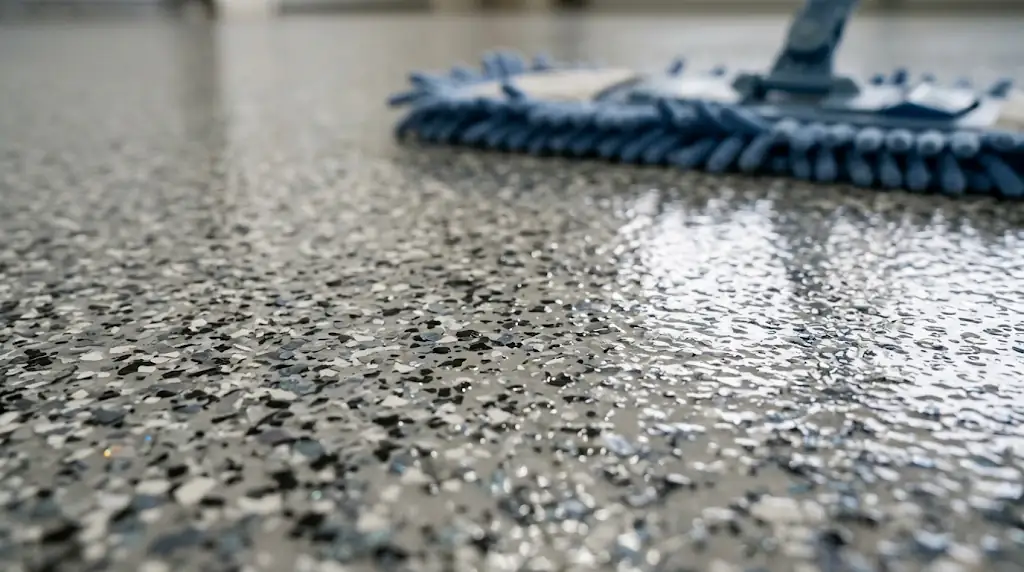
Cleaning and maintaining epoxy flooring in North Texas requires routine dry-sweeping with a microfiber dust mop to remove abrasive clay grit, combined with regular mopping using warm water and a pH-neutral cleaner. Never apply acidic solutions like vinegar, citrus degreasers, or soap-based detergents, as these chemicals strip protective topcoats and leave sticky residue films that attract North Texas dust.
High-performance epoxy and polyaspartic floor coatings are non-porous and naturally stain-resistant. However, residential garages in Collin County face severe environmental wear from abrasive soils, intense summer vehicle heat, and mineral-heavy municipal water. A structured maintenance schedule preserves the commercial-grade gloss and guarantees maximum floor longevity.
Recommended Maintenance Schedule
Adhering to a planned maintenance schedule prevents fine soil particles from scratching the topcoat under foot and vehicular traffic.
| Frequency | Cleaning Task | Recommended Tool | Approved Solution |
| Weekly | Dry grit and dust sweep | 24–36″ Microfiber dust mop | None (Dry sweep only) |
| Bi-Weekly / Monthly | Deep wet wash | Microfiber or foam flat mop | Warm water + pH-neutral cleaner (or clear ammonia) |
| Immediate | Spot spill cleanup | Shop towel or microfiber rag | Dry wipe or diluted neutral degreaser |
| Annually | Heavy spring decontamination | Soft-bristle deck brush + squeegee | Diluted all-purpose neutral wash + fresh rinse |
North Texas Environmental Factors That Impact Maintenance
Cleaning a garage floor in Collin County involves fighting regional weather cycles and distinctive soil characteristics that northern or coastal states do not encounter.
- Abrasive Blackland Prairie Dust: The native soil across North Texas is dense, fine-particulate clay. As vehicles drive into the garage, tires track in dry clay and caliche grit. When walked on or driven over, these microscopic minerals act like sandpaper against clear polyaspartic topcoats, eventually dulling high-gloss finishes if not dry-swept regularly.
- Mineral-Rich Hard Water: Cities across Collin County draw surface water that contains elevated levels of dissolved calcium and magnesium. Letting hose water air-dry on an epoxy floor causes calcified water spots that leave dull white rings. Floors should always be dried with a rubber floor squeegee or soft towel after washing.
- Baking Vehicle Heat: During July and August, automotive engines and tires transfer extreme heat into the garage. Oil drips or coolant spills that sit on a hot floor will bake into residue. While commercial resin resists chemical burning, heat accelerates chemical adhesion, making immediate spot cleanup essential.
- Spring Pollen and Organic Tannins: Oak, cedar, and ragweed pollen blanket North Texas in early spring. When blown into garages during seasonal storms and mixed with standing humidity, plant tannins can leave faint amber stains if left undisturbed for months.
The Correct Cleaning Chemistry: What to Use and What to Avoid
Using the wrong cleaning chemical will ruin an epoxy floor faster than heavy machinery. Polyaspartic and epoxy topcoats are engineered to resist harsh vehicle fluids, but their optical clarity relies on chemical neutrality during routine cleaning.
DO USE:
• Warm water with gentle, pH-neutral cleaners
• Clear, non-sudsing ammonia (1/2 cup per gallon of water)
• Microfiber pads, foam mops, or soft-bristle nylon deck brushes
• Rubber floor squeegees for water extraction

DO NOT USE:
• White vinegar or citrus-based cleaners (acid breaks down resins)
• Soap-based detergents or dish soaps (leaves a dulling film)
• Bleach or harsh chemical strippers
• Steel wool, wire brushes, or abrasive scouring pads
Liquid dish soaps and commercial floor waxes leave a waxy surfactant layer on non-porous coatings. This film clouds the high-gloss shine, becomes dangerously slick when wet, and acts as a magnet for fine dust. Acidic compounds—including standard vinegar solutions—possess low pH levels that slowly etch away the aliphatic chains in polyaspartic clear coats, leaving the floor vulnerable to hot-tire pickup. For cleaning agents, stick to products that meet certified neutral standards, such as those cataloged under the EPA Safer Choice program.
Step-by-Step Deep Cleaning Guide
For monthly maintenance or cleaning after heavy rainy periods, execute this four-step cleaning sequence:
- Clear Loose Dirt: Push a wide microfiber dust mop across the entire surface. Pick up loose sand, dirt, and pet hair. Avoid traditional straw brooms; stiff bristles skip over fine dust and push clay particles into concrete control joints.
- Mix the Solution: Fill a bucket with warm water and add 2 to 3 ounces of a pH-neutral cleaner per gallon. Alternatively, mix 1/2 cup of clear, unscented ammonia into one gallon of hot water to cut through vehicle film without leaving any residue.
- Wet Mop in Sections: Submerge a flat microfiber mop pad, wring out excess liquid so it is damp rather than soaking wet, and mop using overlapping strokes. For high-traffic tire lanes with ground-in road grime, scrub lightly with a soft nylon deck brush.
- Extract the Water: Do not let dirty wash water pool and evaporate. Pull the dirty water out of the garage and onto the driveway using a high-density rubber floor squeegee. This removes all suspended solids and prevents hard-water scale from forming.
Removing Difficult Automotive Stains
Industrial-grade epoxy flooring is non-porous, meaning chemicals cannot soak into the concrete beneath. When unexpected leaks occur, use these targeted removal strategies:
- Motor Oil and Transmission Fluid: Wipe the bulk pool up immediately with blue shop paper towels. Spray the remaining film with a diluted, biodegradable neutral degreaser, let it sit for two minutes, and wipe clean with a microfiber cloth.
- Rubber Tire Marks: Turning vehicle wheels while stationary can transfer hot rubber friction marks onto the surface. Spray a small amount of heavy-duty cleaner directly onto the mark, allow it to soften the rubber for five minutes, and agitate with a medium-stiff nylon bristle brush before wiping dry.
- Dried Latex Paint or Construction Adhesives: Gently scrape the droplet off the floor using a flat plastic putty knife. Never use metal razor blades, which can slice through the topcoat. If adhesive sticks, apply a small dab of isopropyl alcohol to soften the bond, then wipe clean.
Maintenance Considerations Across Collin County Subdivisions
Local maintenance demands change depending on the age of your subdivision, tree canopy, and proximity to open ground:
- Celina and Prosper: Widespread active home construction generates intense volumes of silica dust, airborne caliche, and construction traffic debris. Garages in these areas require weekly dry-mopping to prevent heavy aggregate buildup from dulling the surface.
- Plano and McKinney: Established neighborhoods feature mature oak, pecan, and pine trees. Garages collect heavy organic debris, seasonal pollen, and damp leaves. Regular seasonal hose-downs and squeegee cleanups prevent organic tannins from settling along garage door thresholds.
- Frisco and Allen: High concentrations of home gyms, recreational workshops, and finished multi-vehicle spaces demand bi-weekly microfiber dust management to eliminate static surface dust and keep high-gloss decorative flake systems bright.
- Little Elm: Elevated ambient humidity near Lake Lewisville makes garage slabs prone to condensation during spring warm fronts. Keeping the floor free of dust prevents wet dust slurry from tracking into the interior living spaces.
Maintaining a commercial-grade epoxy or polyaspartic garage floor requires minimal physical effort when executed with the correct tools and chemistry. By eliminating abrasive clay dust and avoiding harsh acids, your floor will retain its showroom mirror gloss and slip-resistant performance for decades.
If your current concrete is unsealed, stained with old motor oil, or showing failed paint, upgrading to a professional industrial system eliminates concrete dusting permanently. Contact Frisco Epoxy Flooring to explore our commercial-grade, low-maintenance flooring solutions. Head over to our contact page today to request an on-site consultation and quote.